
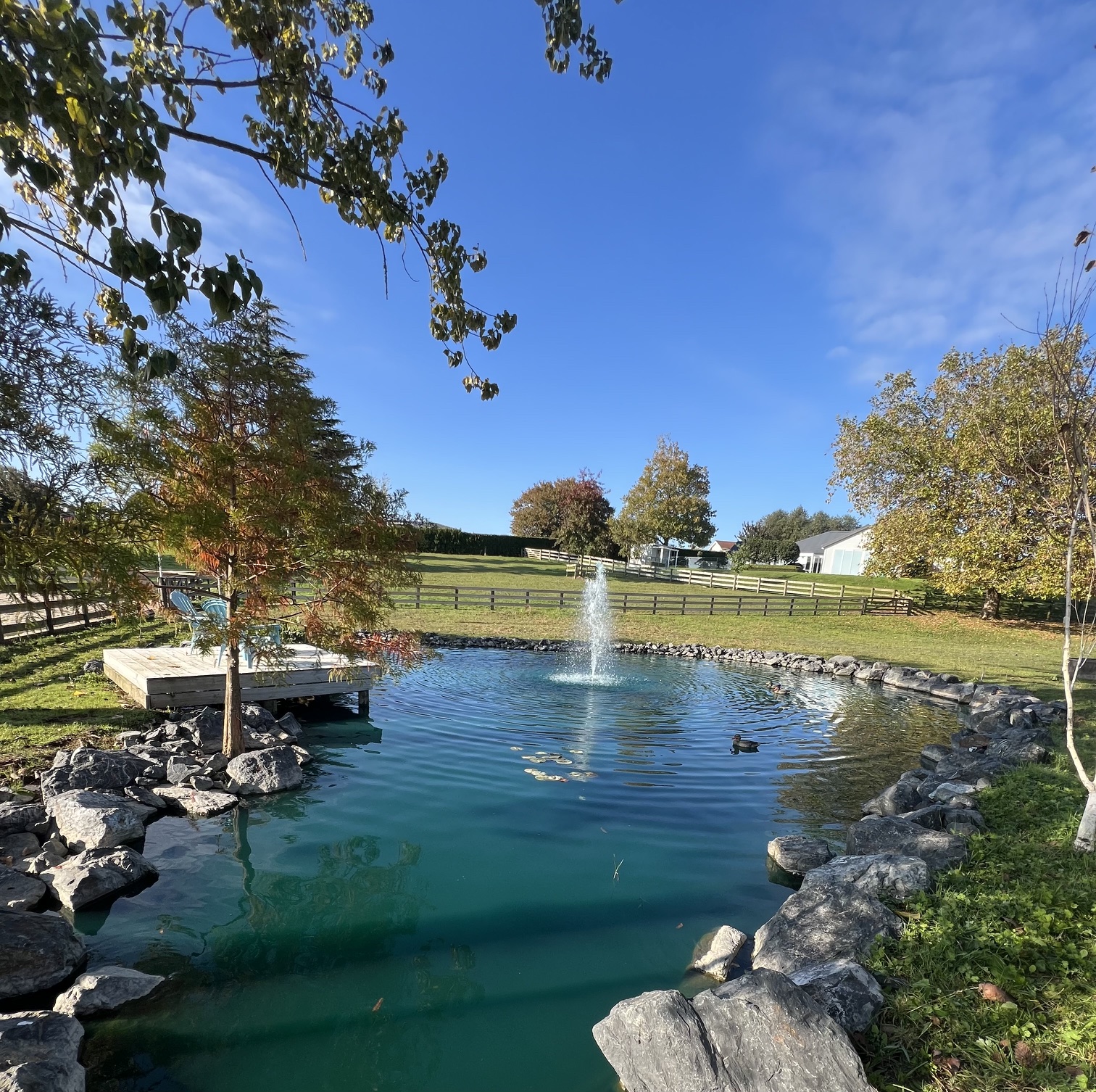
You want a pond that looks good over summer. Clear water, something you’re happy for people to see, not a job hanging over you. A pond that goes green and mucky over Christmas didn’t go wrong in December. It went wrong back in September, when it still looked perfectly fine and nobody was paying it much attention. That’s the frustrating part. By the time you can see the problem, it’s already built.
Healthy Ponds products have been clearing ponds since 1999, and the pattern is nearly always the same. Start before you see the problem and the pond largely looks after itself through summer. Leave it and you’ll spend the hottest weeks of the year trying to rescue it. Here’s why ponds turn, when to start, and what products to use.
Why spring decides how summer goes
A pond spends winter quietly filling up with leaves, plants, and rain carrying fertiliser and sediment off the lawn or the paddock. In cold water none of that breaks down properly, so it settles on the bottom and sits there through the coldest months, building into a layer of sludge.
As the water warms through spring, all the nitrogen and phosphorus stored in that built-up sludge becomes available at the same time algae are looking for something to feed on. A pond that looked clear in October can be pea soup by Christmas, and the reason isn’t anything that happened in December. It’s from what had been accumulating over the winter, which is why the cheapest time to sort a pond out is well before it looks like it needs sorting out.
Watch the water temperature, not the calendar
What decides when to start isn’t a date, it’s the temperature of your water. Our treatments work through beneficial bacteria, and in cold water bacteria barely move. Once the water reaches 7°C they become properly active, and that’s the point where treating your pond become effective.
In the North Island it’s usually September, and down in the South Island it can be as late as the end of October before the water temperature comes up to where the bacteria are active. Water is also much slower to warm than air, often by several weeks, so the first genuinely warm afternoon isn’t the signal.
Your own pond matters more than your region, though. A shallow pond sitting in full sun will be ready well before a deep one under trees, even if the deep one is much further north. The most reliable way to know is to measure your water temperature.
How to treat your pond
Before the main treatment starts
While the water is still cold, you can start clearing out debris that will cause issues later. Everything you take out now is organic matter your treatments don’t have to deal with later.
If there’s material or scum sitting on top, using Rush will start breaking it down within a day or two, and you don’t need to wait for spring before you use it. Note: if you have fish in the pond, use half the dosage.
Month 1: Start the main treatment
Month one begins once your water is above 7°C, whenever that happens for your pond. Natural Blast and AquaSphere PRO go in together on the first day, then Natural Blast again on day seven and day fourteen, with a fresh sphere every thirty days after that. The sphere releases slowly on purpose, because the bacteria in it only live seven to ten days and one application won’t cover a month no matter how much you use.
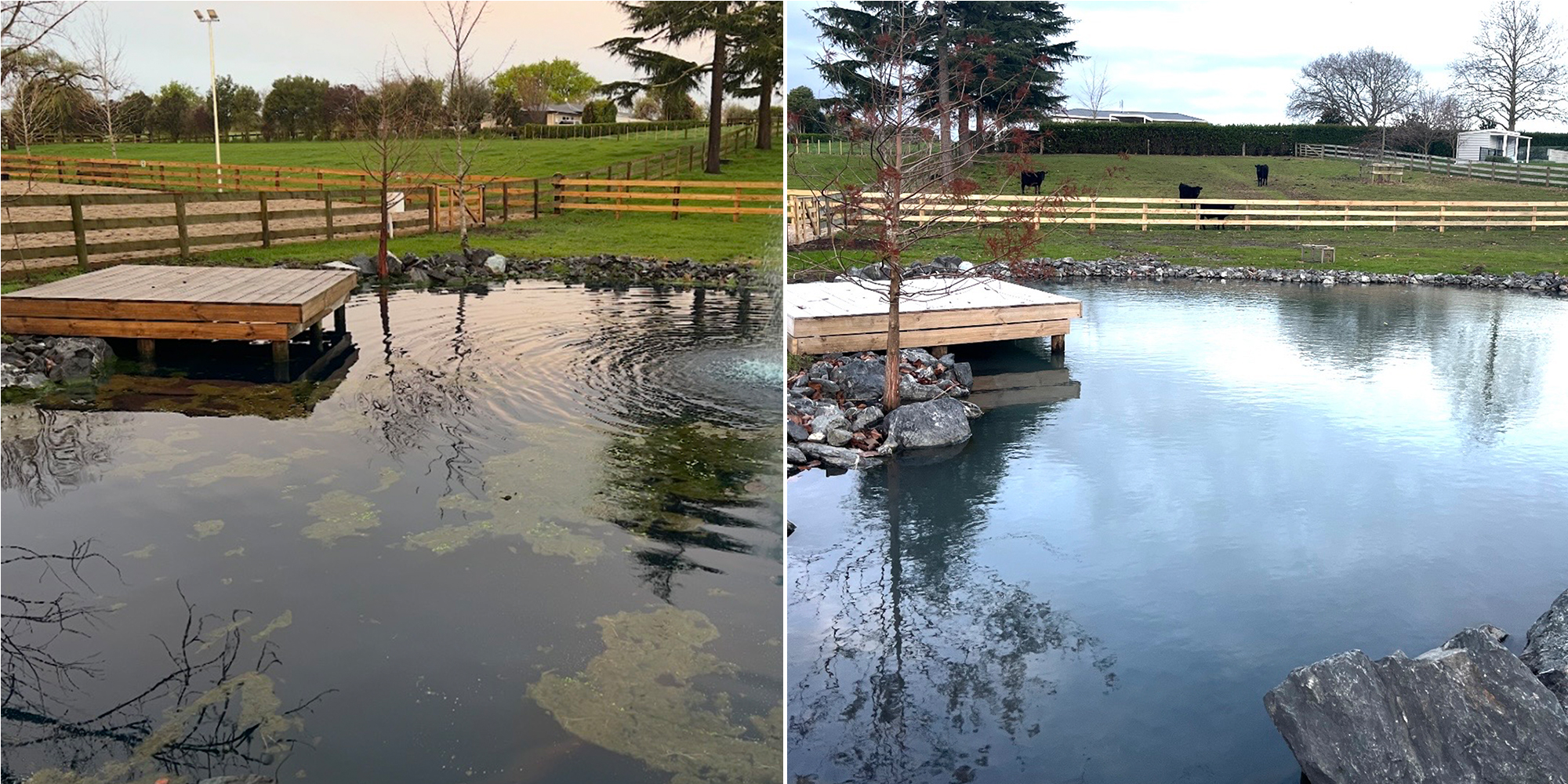
Expect the pond to look worse before it looks better. A week or two in, the organic matter on the bottom tends to lift toward the surface before it breaks down, and plenty of people give up at that point. Make sure to keep treating it and you will see it begin to clear quite suddenly afterwards.
Month 2: Target the problem areas
Keep the AquaSphere PRO going with a fresh one every thirty days. The water will be warmer by now, which is when Muck Pellets start working properly. They sink and treat specific spots rather than the whole pond, so put them where the build-up is worst: the shallow end, around a wharf, the corner the wind pushes everything into.
Month 3: Once it’s clear, dye it
This is where you get the pond looking its best going into the hottest part of the year. Once the water has come right, Pond Dye finishes the job and holds its colour for about thirty days. It also blocks some of the sunlight and keeps the water cooler, which slows algae down through the worst of the heat. Keep the Aquasphere PRO going monthly alongside the dye.
Ongoing Maintenance
Once the pond is clear, keeping it that way is a short monthly routine:
How long to keep it up
Treating all year round is the easiest way to run a pond, because nothing ever gets the chance to build up and you’re never playing catch-up. If that’s more than you want to commit to, treat through the warmer half of the year instead. For most of the country that works out at about six to eight months, starting in September or October.
If you’re estimating your pond’s volume rather than working it out, your treatments might underperform. Using our pond calculator will help you get an accurate size for your pond and treatments.
Need help working out which products you need? Send us your pond details through our free pond treatment plan and we’ll sort it out with you.