
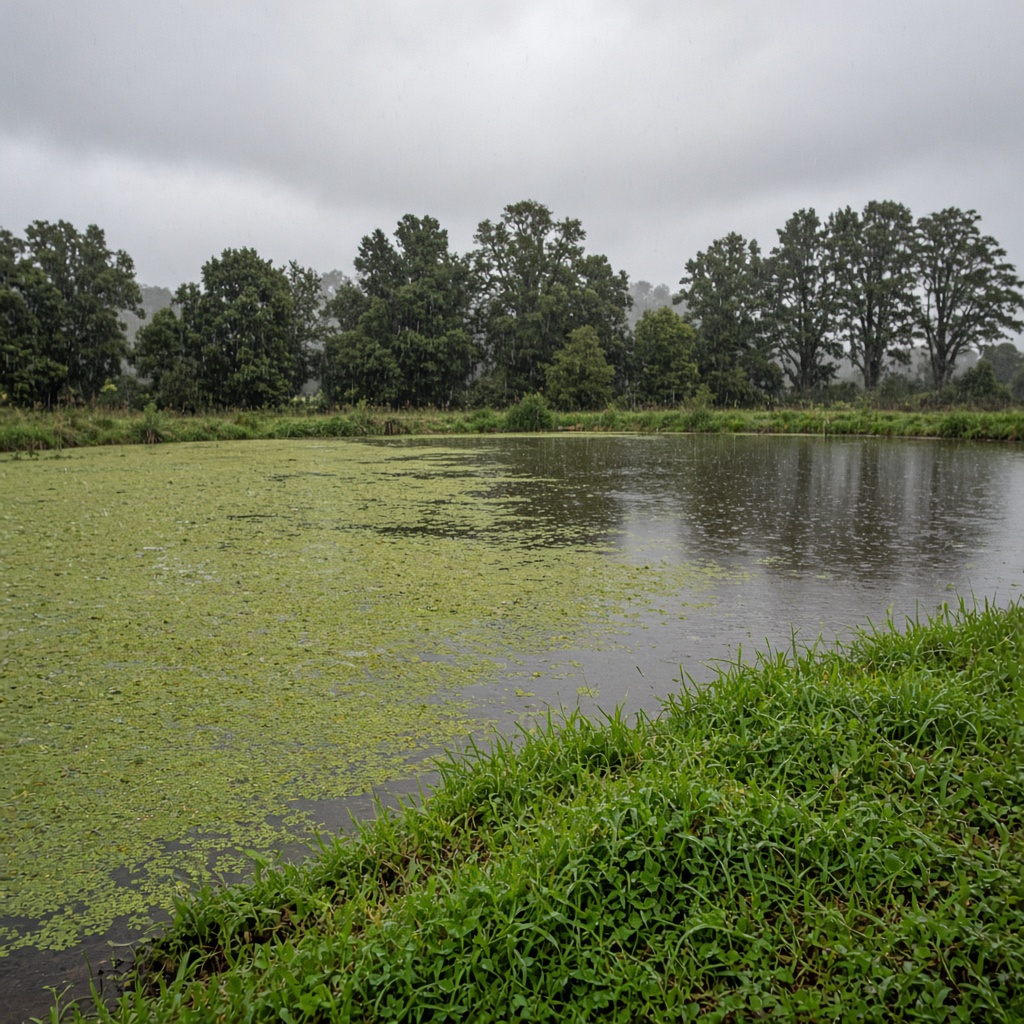
Spring rain does two things to a pond. It tops the water up, and it washes nitrogen and phosphorus off the paddock, the lawn and the leaf piles. Duckweed is already in a lot of sheltered corners. Give it that flush and a warm week, and the corner becomes a skin.
The plant is a small green oval with a fine root hanging under it. It is not hair-like algae, and it is not a weed rooted in the bank. What duckweed is goes through how to tell it apart. This is the timing, once the rain has been through.
A light cover can shade the water. A solid mat does the opposite: no light below it, poor circulation, a smell, and fish that cannot move through it. Healthy Ponds products do not kill duckweed. They take away the nutrients the next fronds are using.
Get the mat off the water
Skim what you can reach and take it off the site. A heap on the bank washes back in with the next rain. If the surface is already closed over, a herbicide can knock the mat back faster. In New Zealand that is often a consent, and a mat that dies all at once can strip the oxygen as it rots. Read herbicides or a natural follow-up before you go that way.
Then treat the water underneath
AquaSphere PRO sinks and releases bacteria for about 30 days, working on the sludge and the nutrients at the bottom. Natural Blast works down through the water in about a week. Together they leave less for the next crop. If the water under the duckweed is also green, treat that as green water in spring, not as more duckweed.
A fountain or an aerator does not feed duckweed, but a dead corner with no movement will. Keep the surface from sitting still in the pocket the rain filled. The seasonal start, if you are also dealing with the colour, is in when to start getting your pond ready for summer.
Need it sized rather than guessed? Send the pond details through the free pond treatment plan and we will sort it out with you. Or call 09 415 0300.