
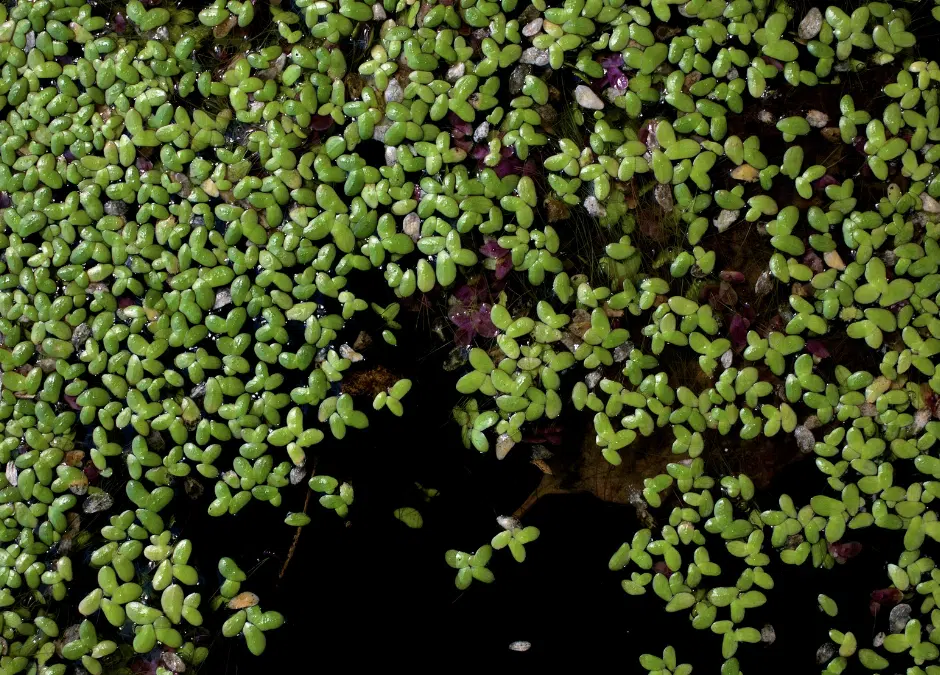
Duckweed is a fast-growing aquatic plant that can quickly take over a pond if left untreated. While it can be beneficial in small amounts, excessive duckweed growth can disrupt your pond’s ecosystem, reduce oxygen levels, and block sunlight from reaching underwater plants.
What Is Duckweed?
Duckweed refers to a group of tiny, free-floating plants in the Lemnaceae family. These plants are made up of oval-shaped green leaves, called fronds or thalli, each roughly the size of a fingernail. Hanging below each frond is a root-like structure known as a rootlet.
Duckweed floats on the surface of still or slow-moving water and is one of the fastest-growing plants in the world. A single frond can produce new fronds through budding, allowing populations to expand rapidly.

Why Is Duckweed a Problem?
While a small amount of duckweed can provide shade and nutrients for aquatic organisms, dense duckweed mats can cause:
- Oxygen depletion by blocking sunlight and limiting photosynthesis
- Reduced water clarity
- Hindered fish movement and water circulation
- Unpleasant odors and poor pond aesthetics
What Causes Duckweed Growth?
Duckweed thrives in nutrient-rich water, especially when nitrogen and phosphorus levels are high. Common sources include:
- Fertilizer runoff from lawns or farms
- Decomposing organic matter like leaves and algae
- Waterfowl droppings
Still or slow-moving water and warm temperatures also create ideal conditions for duckweed to spread.
What’s the Solution?
Option 1: Aquatic Herbicides
When duckweed growth is severe, herbicides provide the most immediate and effective results.
Using these products ensures rapid duckweed reduction, giving your pond an immediate reset.
Option 2: Natural Solution
Duckweed thrives on nutrients from organic matter such as decomposing plants, leaves, and animal waste. By targeting the source, you can reduce the likelihood of regrowth.
- Step 1: Remove Organic Matter and duck weed
Physically skim and clear excess debris and decaying vegetation from the pond. - Step 2: Use Healthy Ponds AquaSphere 30 day slow release formula.
The AquaSphere works by releasing beneficial bacteria that break down nutrients and sludge in your pond, leaving less fuel for duckweed growth. - Step 3: Improve Water Circulation
Install an aerator or fountain to increase oxygen levels and keep water moving. Circulation helps prevent stagnant conditions that duckweed loves.
This method is slower than herbicides but offers a natural, eco-friendly approach to long-term pond health.
FAQ’s
Are there eco-friendly options for managing duckweed in my pond?
Yes, a natural approach involves removing excess organic matter, using bacterial treatments like AquaSphere to reduce nutrients, and enhancing water circulation with aerators or fountains, which together support long-term pond health without harming the environment.
What is duckweed and how does it grow?
Duckweed is a group of tiny, free-floating aquatic plants in the Lemnaceae family. They are made up of oval-shaped green fronds that float on still or slow-moving water, and each frond can produce new fronds rapidly through budding, leading to quick population growth.
What factors contribute to the growth of duckweed?
Duckweed thrives in nutrient-rich water, especially with high levels of nitrogen and phosphorus often stemming from fertilizer runoff, decomposing organic matter, and waterfowl droppings. Still or slow-moving water and warm temperatures also promote its spread.
Why can dense duckweed mats be problematic for my pond?
Dense duckweed mats can cause oxygen depletion by blocking sunlight and limiting photosynthesis, reduce water clarity, hinder fish movement and water circulation, and result in unpleasant odors and poor aesthetics.