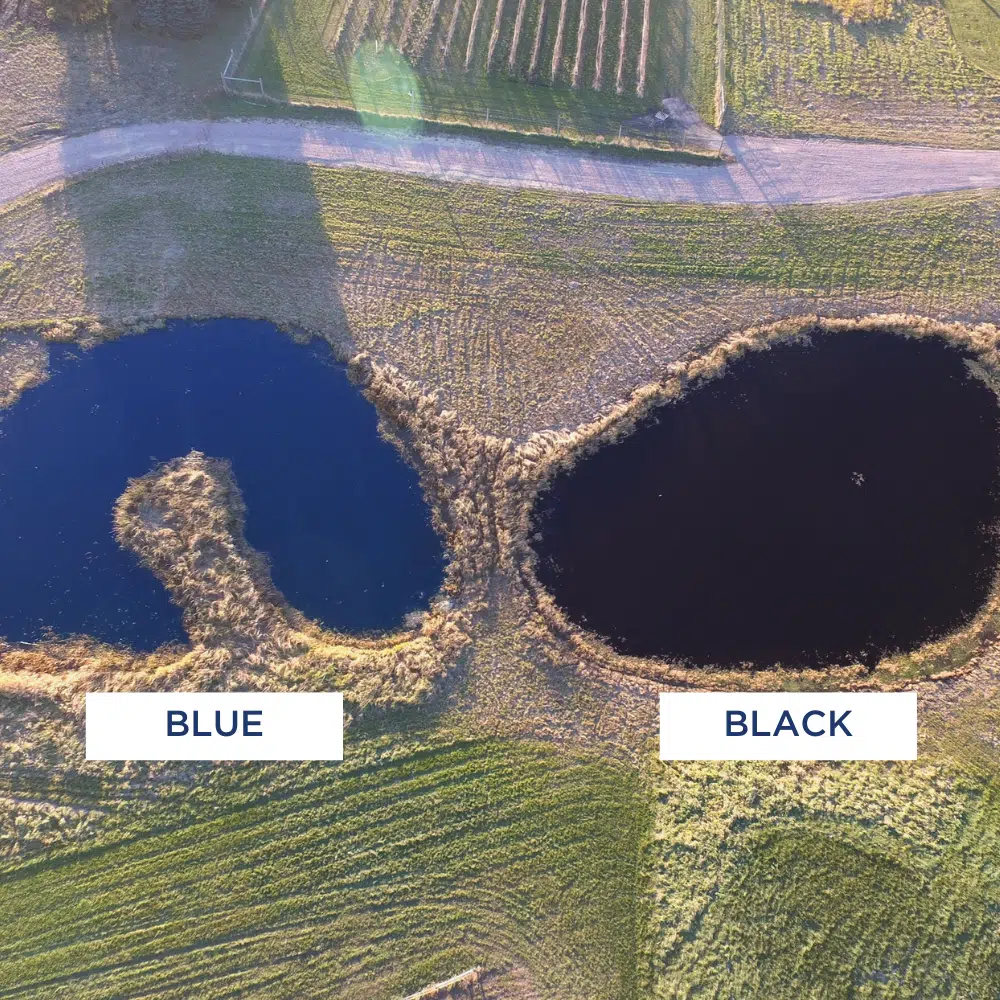
Both dyes are the same idea. They colour water that is already in good shape, cut some sunlight, and keep the shallows a little cooler. The choice is how you want the pond to read from the bank.
Healthy Ponds pond dye is safe for people, pets, stock, fish, birds and plants. It will not stain irrigated turf. It will stain your hands, so wear gloves. How long it lasts, and why you should not dye a dirty pond, is in how pond dye behaves.
Black, when you want it to look like deep water
Black dye goes dark and mirror-like. It reflects trees and sky and hides what is on the bottom, which is why golf course superintendents usually pick it. It suits a larger pond or a lake, an estate dam, and any water feature that should disappear into the landscape rather than announce itself.
Because it blocks more light, it also does more to keep the water cool. That is useful on a shallow shelf that otherwise cooks in January.
Blue, when you want it to look like water
Blue dye is the colour people expect. It suits a smaller pond, a garden water feature, and a residential dam where a black surface would look like a hole. It still cuts some light. It just does not pretend to be a mirror.
Same rules for both
Put the dye in once the water is clear. A bag treats about 1.8 million litres, and the pond calculator is there if you are guessing the volume. The colour runs through the pond in about a day and holds for about a month. Sun, rain and overflow shorten that. Reapply through summer, and keep the monthly AquaSphere PRO going beside it. Dye does not replace the bacteria.
Not sure which job you are looking at? Send a photo through the free pond treatment plan, or call 09 415 0300.